Posts

Folktales & memory with author Katherine Langrish

Image
  Do folktales contain memory? Does the odyssey or Iliad contain history? What is remembered and what is forgotten? Over all the event was an interesting talk and Q&A session. These were some of the questions that arose during an interesting talk given by Katherine Langrish at the University of Warwick on the 25th of January 2017.   She began with a picture of Arthur’s stone, a grouping of stone described as being built by King Arthur, the place of his burial, or where one of his rivals was buried. We are after all a nation of storytellers where even the remotest stone emerging from the earth in Cornwall, becomes the bones of a long forgotten giant. But what “truths” are present in these fragments of stories we call folklore? Memory Langrish proposed is not just about the things our brain recites back to us but also contains a sense of who we are, our identity. Folklore then is a form of memory, and memory a form of folklore. Personal...

“Inspirational”, “fantastic”, “an unexpected delight”

Image
To celebrate Coventry’s bid for the City of Culture (2021), Dr Emma Parfitt, IAS ECF Fellow, University of Warwick, and Fargo village created an exhibition in the centre of Coventry on the 26th November 2016. The exhibition involved 17 artists (from all mediums and crafts) and doctoral students at the University of Warwick. The artists created pieces based on research. This event was an exciting opportunity to bring members of the public, artists and academics together with the aim of bridging the divides between art-science and academia-community.   226 people from Coventry came to the exhibition. Looking into the exhibition what struck me the most was how throughout the day there were always conversations going on. It was a lively, welcoming, social space, with kids, and perhaps I should say kids of all ages, engaging with the artists, researchers and the work that had been produced. Some comments about the collaborations for example were: Useful to see research next t...

group authored article published

Image
A Group Interview about Publishing with Professor Jack Zipes Emma Louise Parfitt, Emine Erdoğan, Heidi Fritz, Peter M. Ward Click here to for open access paper   Abstract The conversation piece is the product of a group interview with Professor Jack Zipes and provides useful insights about publishing for early career researchers across disciplines. Based on his wider experiences as academic and writer, Professor Zipes answered questions from PhD researchers about: writing books, monographs and edited collections; turning a PhD thesis into a monograph; choosing and approaching publishers; and the advantages of editing books and translations. It presents some general advice for writing and publishing aimed at postgraduate students. Professor Zipes is an Emeritus Professor at the University of Minnesota Twin Cities, United States, a world expert on fairy tales and storytelling highlighting the social and historical dimensions of them. Zipes has forty years of experien...

What do Starburst and Beetlejuice have in common?

Image
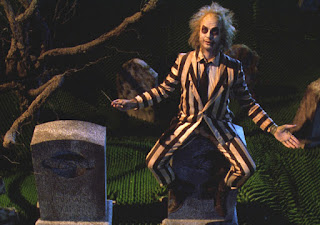
  Tim Burton’s Beetlejuice (1988) For people who have never been to an exhibition and wonder why it would be relevant for them, I would ask them… do you like horror films? Seems a bit random I agree. Needle felting artist, Jenny Egerton  selected Catherine Lester’s research in children’s horror films to inspire a piece of art. Perhaps you have watched Coraline (2009) or Frankenweenie (2012) with your kids? Or are a diehard Beetlejuice (1988) fan? 'Beetlejuice,'Beetlejuice…’ I won’t tempt fate. Catherine is in the Department of Film and Television studies at Warwick University. She said, ‘My research investigates the children’s horror film in US cinema from early child-friendly films with frightening elements, such as Snow White (1937), to more recent films like Frankenweenie (2012). Children are traditionally thought of as being innocent, vulnerable and impressionable beings. However, children have been enjoying horror films for decades. I explore how thes...

How the gypsies got their music: the future of storytelling research

Image
Warwick University is holding its first storytelling conference aimed at storytellers, arts practitioners, and researchers. Photo by Alden Chadwick (Flickr, http://bit.ly/2aBeD8k ) When? 28 th November 2016, 12.00 noon – 17.15 pm Where? Warwick University, Main library, Coventry What do we want the future of storytelling research to be? This conference considers current work that is being done in the broad field of storytelling. The aim is to engage people to thinking different avenues that future research in storytelling could take. We will cover a number of different topics involving inclusive research with people with learning difficulties, applied storytelling and drama with the Belgrade Theatre, and how to consider the role of the storyteller in research. In line with our creative theme there will be a live/recorded performance of How the Gypsies got their music (by Cornish storyteller Mike O’Connor), and a poetry writing workshop. For infor...